No accident, incident, or deviation arises in isolation
Before an event occurs, a series of conditions was built: decisions made, resources allocated, procedures established, activities carried out, conditions that changed, and barriers that worked or failed.
That is why our analysis is not limited to the moment of the accident. We understand the chain of events that led to the outcome — and that is how TCO turns investigation into knowledge.
Every outcome is the result of a sequence of decisions, conditions, behaviors, and processes.
THREE INTERDEPENDENT DIMENSIONS
We compare what should have happened with what actually happened
Planning
The scenario that should have happened: what was planned, the procedure, the resources, and the barriers designed.
Execution
The work as it actually happened: conditions present, decisions made, and field adaptations.
Outcome
The result actually produced: the event, its impacts, and the real performance of the barriers.
The difference between the three dimensions is where the answers lie
It is in this gap between what was planned, what was executed, and what was achieved that the human, organizational, and operational factors a traditional investigation cannot see come to light.
WHAT WE INVESTIGATE
The same scenario, from different perspectives
Each dimension is examined with the same discipline, in a clear, organized, and replicable way.
What was planned?
What was actually carried out?
What conditions were present?
What decisions were made?
What barriers existed?
Which barriers worked?
Which barriers failed?
What human, organizational, and operational factors contributed?
Module 01
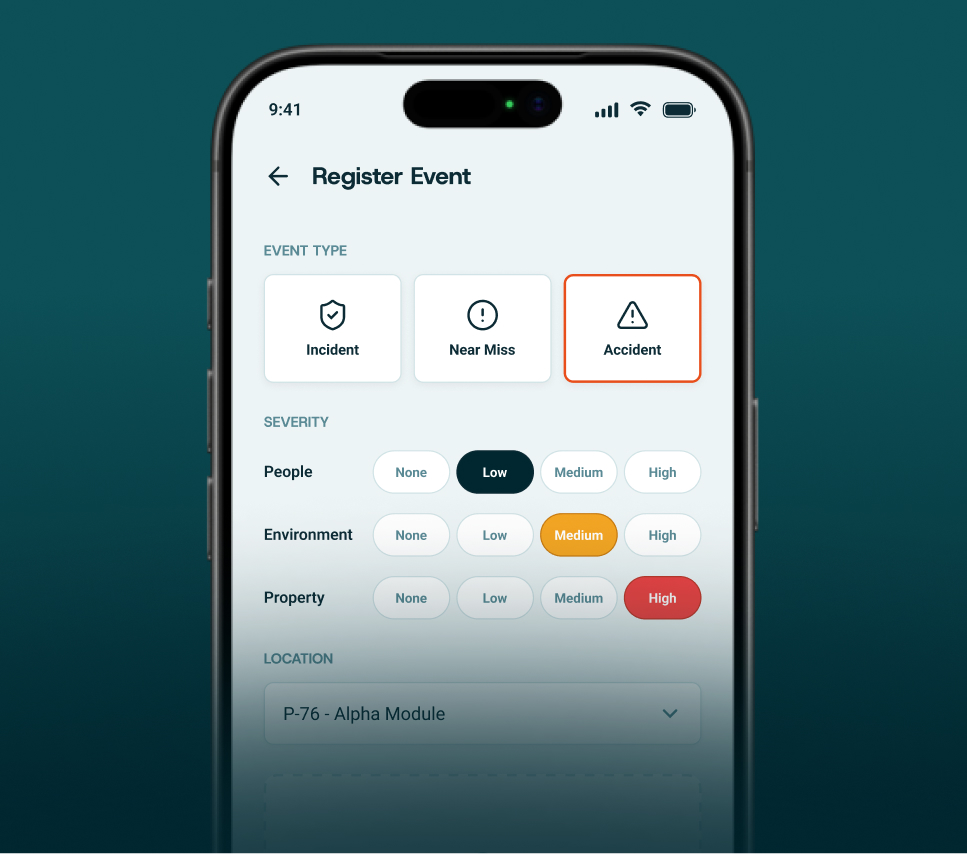
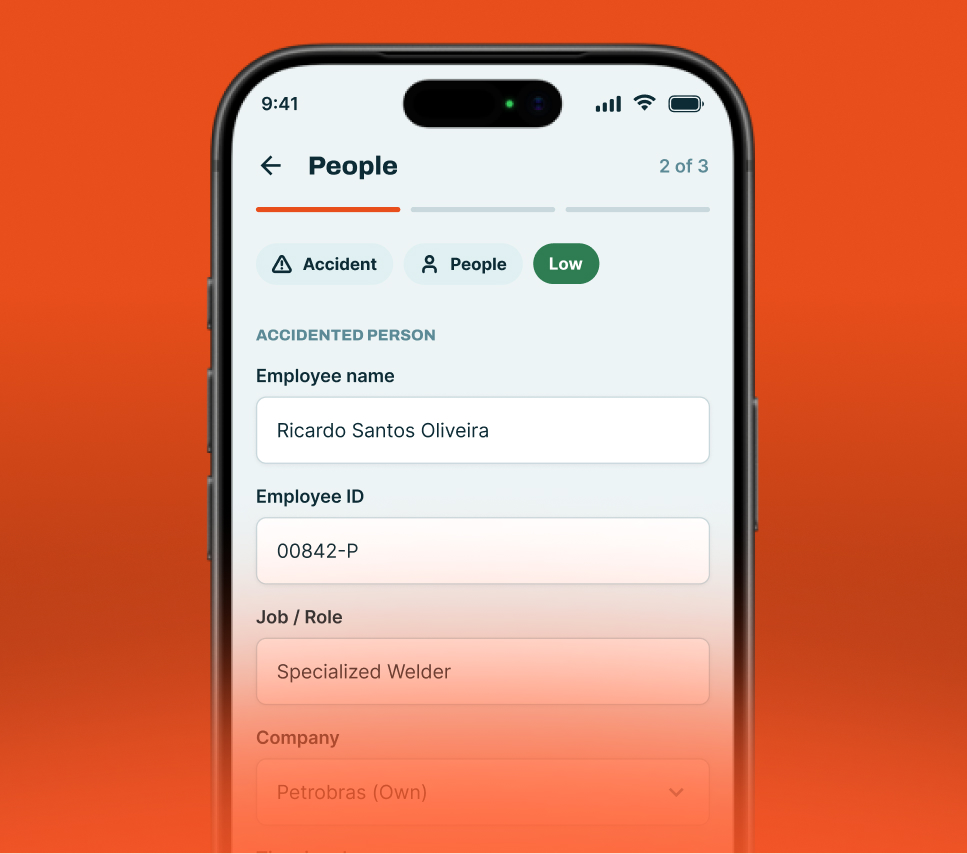
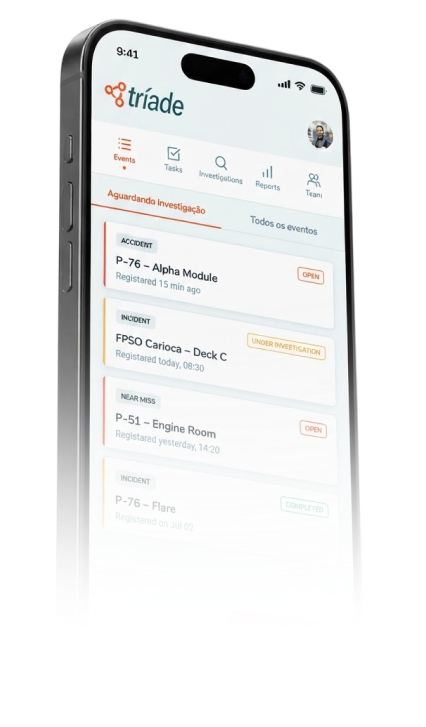
Incident recording
Document events in a structured, standardized way. Record information, evidence, photos, location, classification, and other data relevant to starting the investigation process.
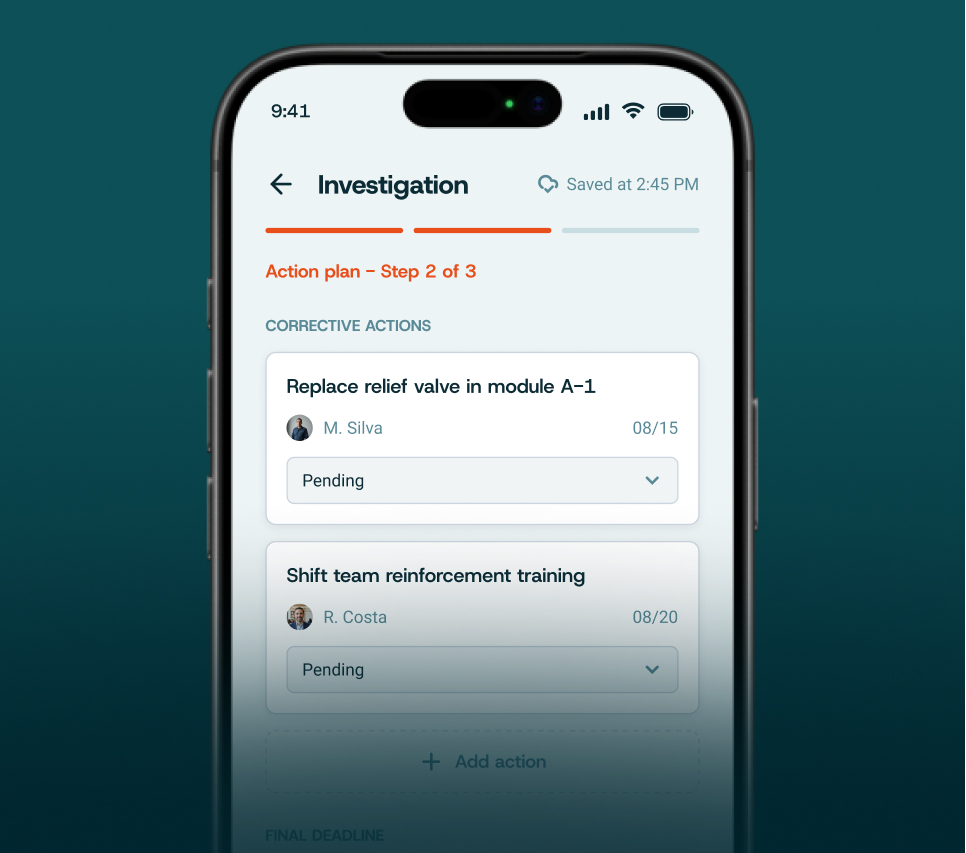
Carry out the investigation following a structured sequence. The methodology guides the professional through the analysis, connecting information and taking the investigation through TRÍADE's three pillars.
Investigation doesn't end when the report is issued. It ends when the organization is able to understand the event, act on its causes, and turn that knowledge into a barrier for the future.
Each stage follows clear, organized, and replicable logic.
Comprehensive
Analyzes the event end to end, connecting planning, execution, and outcome.
Visual
Turns complex information into an easy-to-understand structure.
Practical
Developed with the reality of field workers in mind.
Transformative
Turns investigation into organizational learning and prevention.
Strategic asset
The full details of the methodology are made available exclusively to clients and to professionals trained and certified through TCO Integrity Apex's specific programs.